Follow-up To Loading CSS And JS Conditionally
First of all, I'd like to thank everyone who read and gave their 2 cents about the [Wordpress Plugin Development] How To Include CSS and JavaScript Conditionally And Only When Needed By The Posts post. The article was well received and will hopefully spark some optimizations around loading styles and scripts.
Here are some discussions and mentions around the web:
- an article on Weblog Tools Collection
- a forum post on WP Tavern
- twitter retweets
Sure, there are drawbacks to this method and it does require some more processing on the backend and it's not for everyone, which is why we should always strive for an even better solution.
I stand by my point of view that, for instance, my dedicated …
Updated: August 30th, 2014
Introduction
 In this tutorial, I am going to introduce a WordPress technique that I believe was unpublished until I raised the question a few days ago on the WordPress forums.
In short, the problem I was trying to solve was plugins unnecessarily loading their JavaScript and CSS on *every* page of the blog, even when doing so would achieve absolutely nothing and the plugin wouldn't do any work.
I briefly mentioned this approach here but Scribu decided to expand on …

Introduction
Dear Skype,
you are great. You have the convenience of a nearby, well, convenience store and the UI that is acceptable to even an Apple fanboy (I'm not one, I'm just saying).
Skype also has a Firefox extension which finds all pieces of text that resemble phone numbers on web pages you are visiting and converts them into clickable Skype buttons  . One click and you're dialing the number. The premise is great but the execution… When it comes to your Firefox extension, Skype – you suck. You really suck.
The Problem Bullshit
So what makes me say these mean things? Is it the fact that when simply searching Google for "skype firefox", one finds mostly blog posts …
Updated: January 4th, 2009
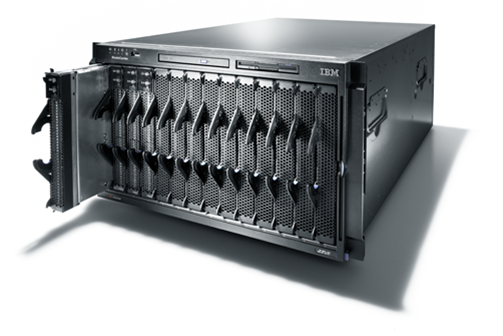 I want to get opinions from outside of my daily circle of people on the best server hardware to use for MySQL. I remember from the conference somebody (Pipes?) mentioning a particular Dell server with multiple disk RAID10 that could supposedly be had for about $6k but I completely misplaced the model number (Frank, did you get my email?).
I know that a multi-disk RAID array with a bunch of fast disks (15k RPM?) is probably the most important method of improving performance, followed by the amount of RAM, so I'm trying to find the best combination/balance of the two. However, server prices on the Internet range so much that I don't even know where to begin to tell a …
MySQL Conference Liveblogging: MySQL Performance Under A Microscope: The Tobias And Jay Show (Wednesday 2:00PM)
- Jay Pipes, Tobias Asplund
- Finding out the number of rows that would have been returned (MyISAM and InnoDB)
- SQL_CALC_FOUND_ROWS and FOUND_ROWS()
- COUNT(*)
- MEMORY table
- if query cache is on, then it makes no difference
- if it's off
- Memory MyISAM is fastest
- FOUND_ROWS() is slightly slower than count(*)
- SELECT … WHERE a UNION SELECT … WHERE b
vs
SELECT … WHERE a AND b - index_merge wins
- composite index is faster
- of course, multiple indexes are more flexible than composite index
- …
MySQL Conference Liveblogging: Performance Guide For MySQL Cluster (Tuesday 10:50AM)
- Speaker: Mikael Ronstrom, PhD, the creator of the Cluster engine
- Explains the cluster structure
- Aspects of performance
- Response times
- Throughput
- Low variation of response times
- Improving performance
- use low level API (NDB API), expensive, hard
- use new features in MySQL Cluster Carrier Grade Edition 6.3 (currently 6.3.13), more on this later
- proper partitioning of tables, minimize communication
- use of hardware
- NDB API is a C++ record access API
- supports sending parallel record operations within the same transaction or in different transactions
- asynchronous and synchronous
- NDB kernel is programmed entirely asynchronously
- Looking at performance
- Fire synchronous insert transactions – 10x TCP/IP time cost
- Five inserts in one synchronous transaction – 2x TCP/IP time cost
- Five asynchronous insert transactions – 2x TCP/IP
…
 beer planet is a blog about technology, programming, computers, and geek life. It is run by Artem Russakovskii - a local San Francisco geek who is currently pursuing his own projects and regularly enjoys hacking Android, PHP, CSS, Javascript, AJAX, Perl, and regular expressions, working on Wordpress plugins and tools, tweaking MySQL queries and server settings, administering Linux machines, blogging, learning new things, and other geeky stuff.


